
- Physical Stores Are Expensive. The Internet Is Flexible.
- Consumers Have Changed, Too
- “But If You Don’t Have a Store, Will People Trust You?”
- Online Businesses Can Reach More People
- That Doesn’t Mean Physical Stores Are Dead
- The New Model: Online First, Offline Later
- Sometimes, Your “Store” Is Just a Link
- So, Is the Future of Business Storeless?
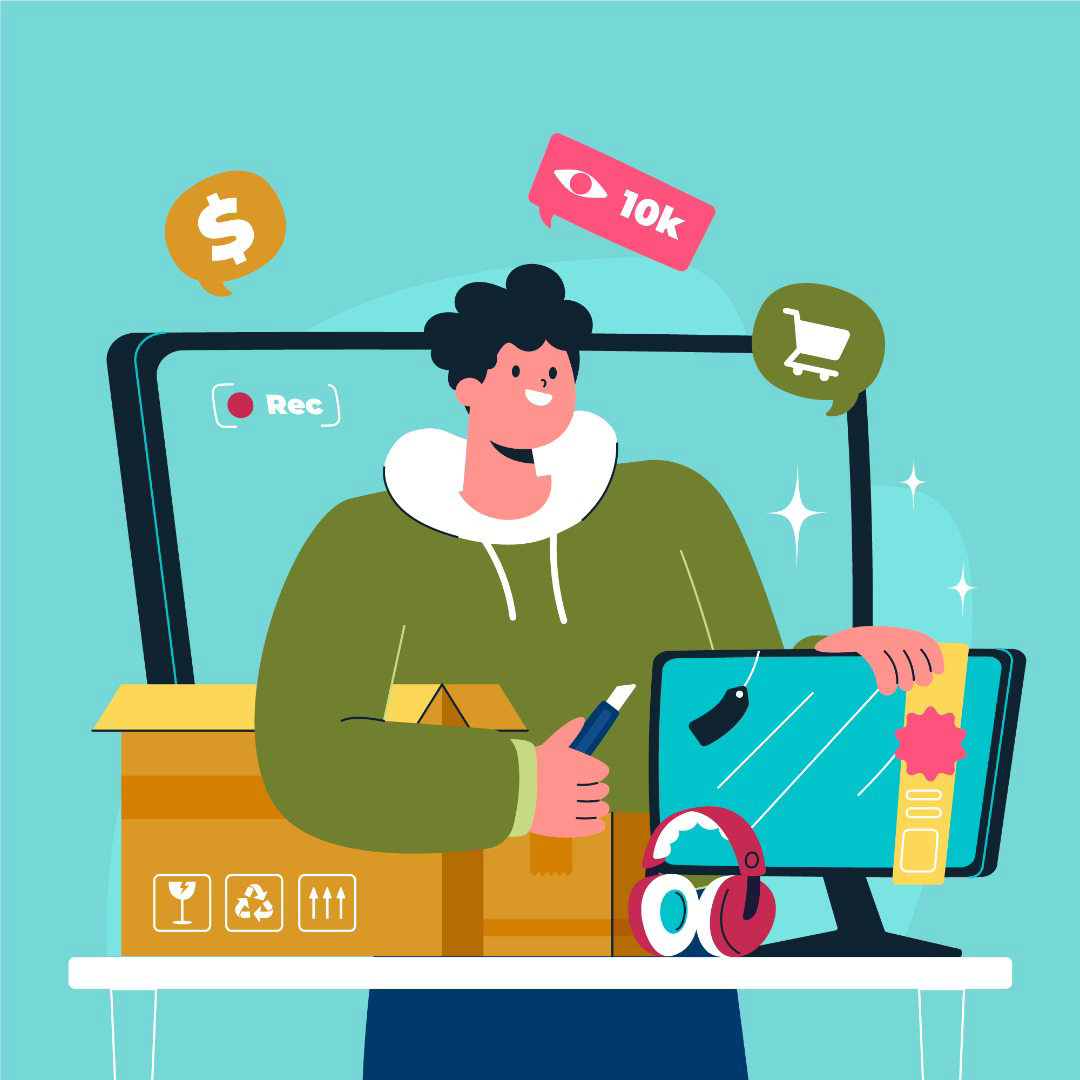
Once upon a time, if you wanted to run a business, having a physical store was almost a necessity. Today? Not necessarily.
Look around, and you’ll find businesses that operate entirely online. Fashion brands sell through Instagram, skincare products go viral on TikTok, food businesses take orders through apps, and service providers run their businesses without a physical office or storefront.
What’s even more interesting is that many of these businesses can reach customers across different cities—or even countries—without opening a single physical store.


So, why are more businesses choosing to go without one?
Physical Stores Are Expensive. The Internet Is Flexible.
Opening a physical store is about more than simply renting a space and putting up a sign.
There’s rent, renovation, electricity, equipment, employees, maintenance, security, and countless other operational costs. And if the location doesn’t attract enough customers, all that investment can become a serious burden.
Online businesses, on the other hand, can start much more simply.
A social media account, a website or microsite, a product catalog, and a payment system can already become a “store” that is open 24/7.
No worrying about closing hours. No expensive rent in a strategic location. And customers don’t have to travel to make a purchase.
The internet has changed what we think of as a store.
A store is no longer necessarily a room with a door and a display window.
Sometimes, it’s simply a link someone opens on their phone.
Consumers Have Changed, Too
The evolution of businesses is closely connected to the way consumers shop.
In the past, someone might visit a shopping mall to look for clothes, compare prices, and eventually decide what to buy.
Today, the process can happen much faster.
See a video → Get interested → Click a link → Check the product → Read reviews → Buy.
The entire purchase journey can happen while someone is simply lying in bed.
Social media has made discovering, considering, and purchasing products feel like one continuous experience.
That’s one reason why social commerce has grown so rapidly.
Brands no longer have to wait for customers to walk into their stores.
They can bring the store directly to the customer’s feed.
“But If You Don’t Have a Store, Will People Trust You?”
That’s a good question.
In the past, having a physical location was often seen as a sign of credibility. If customers could visit your store, they might naturally feel more confident about the business.
But the way consumers build trust has changed.
Customer reviews, testimonials, transaction history, social media presence, website quality, brand identity, and responsive customer service can all influence whether a business feels trustworthy.
There are countless online businesses with thousands of customers that don’t have a physical showroom at all.
This shows that trust is no longer built solely through a physical location. It’s built through experience.
Online Businesses Can Reach More People
Imagine a small shop located on a particular street in a city.
Its potential customers are likely to come mainly from the surrounding area.
Now compare that with an online business.
Its customers could come from Jakarta, Bandung, Surabaya, Medan, Bali, or even from another country.
Location is no longer the biggest limitation.
One viral piece of content can bring thousands of potential customers within hours.
And the business doesn’t need to open a branch in every city to reach them.
One business. One internet connection. Endless possibilities.
That Doesn’t Mean Physical Stores Are Dead
Here’s the interesting part:
Not having a physical store doesn’t mean physical stores are no longer relevant.
For certain businesses, physical locations are still extremely important.
Restaurants, salons, clinics, supermarkets, workshops, and premium fashion brands still rely heavily on in-person experiences that are difficult to replicate online.
In fact, some digital-first brands eventually open physical stores as their businesses grow.
Why?
Because a physical store isn’t just a place to make transactions.
It can become an experience center.
A place where customers can try products, create content, meet communities, and experience the brand in a more tangible way.
So the question is no longer:
“Should a business have a physical store?”
Instead, it becomes:
“What purpose does a physical store serve for this business?”
The New Model: Online First, Offline Later
Today, we’re also seeing a new approach to building businesses.
A brand can start online without immediately investing a huge amount of money into a physical location.
Once the customer base grows and the brand becomes more established, it can experiment with pop-up stores, booths, showrooms, or eventually a permanent store.
The strategy becomes:
Build Online → Grow an Audience → Test the Market → Go Offline
This allows businesses to test whether their products actually have demand before making a major investment in physical infrastructure.
Sometimes, Your “Store” Is Just a Link
Perhaps the most interesting part of this transformation is how technology is shrinking the distance between a business and its customers.
In the past, people might ask:
“Where is your store?”
Today, they might simply ask:
“Do you have the link?”
A single link can lead customers to a business profile, product catalog, social media accounts, contact information, and even a payment page.
In other words, a simple link can become the digital front door of a business.
And that gives even small businesses the opportunity to build a professional presence without owning a large building or expensive storefront.
So, Is the Future of Business Storeless?
The answer might not be completely online or completely offline.
Instead, we may see more businesses adopting a hybrid model.
Online channels can be used to reach audiences, build communities, promote products, and drive transactions.
Offline spaces can be used to create experiences, build trust, and develop stronger relationships with customers.
Because at the end of the day, customers don’t necessarily care whether your business has a physical store.
What they care about is:
Is the product good?
Is the price worth it?
Can I trust the business?
Is it easy to buy?
And most importantly:
Is the experience worth it?
The business world is moving from “Where is your store?” to “Where can I find you?”
And the answer might no longer be an address.
It might simply be a link.